
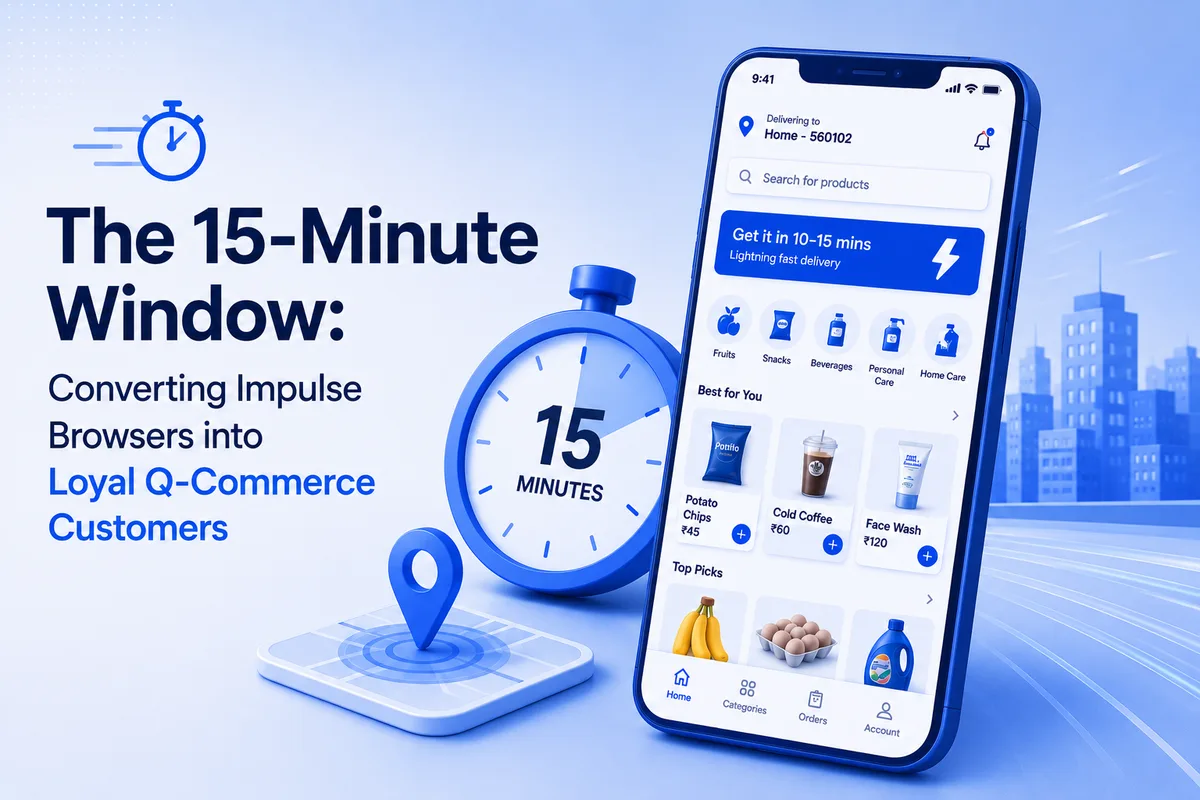
In quick commerce, the compressed decision-making timeline creates distinctive opportunities. Unlike conventional online retail where deliberation extends over days, Q-commerce operates within an accelerated timeframe where spontaneous browsing can rapidly transform into sustained patronage.
Core Behavioral Insight
Customers entering Q-commerce platforms exhibit seemingly contradictory traits: immediate purchasing needs paired with minimal brand preference. Yet this very speed paradoxically enables stronger retention than traditional channels, provided brands recognize and capitalize on this dynamic.
Three Conversion Mechanisms
Problem-Solution Velocity
Shoppers arrive seeking rapid answers to urgent situations. Rather than emphasizing product specifications, successful brands reframe offerings as instantaneous problem-resolution. Effective copywriting addresses immediate contexts — “midnight snack” outperforms “premium korean ramen” for late-night impulse buyers.
Cognitive Load Reduction
Rapid purchasing windows eliminate space for extensive comparison. Instead, brands should employ high-visibility trust signals: ratings, bestseller designations, and streamlined option sets. Each additional decision point diminishes conversion likelihood.
Immediate Gratification Amplification
Speed alone feels mechanical. Emotionally rewarding messaging — “delivered before your tea cools” — transforms convenience into memorability.
Loyalty Bridge Framework
Three sequential moments determine whether initial transactions become recurring relationships:
- Delivery Excellence — Physical fulfillment quality shapes initial brand perception
- Packaging Engagement Hooks — Strategic inserts, QR codes, or offers guide customers toward brand-owned channels
- Habit Formation — Personalized post-purchase touchpoints build recurring behavior
Essential Measurement Metrics
30-Day Repeat Purchase Rate — Captures whether customers return within the critical window when Q-commerce habits form.
Customer Lifetime Value by Acquisition Type — Different acquisition sources yield varying customer quality; tracking CLV curves identifies the highest-value pathways.
The Takeaway
Successful impulse-to-loyalty engineering creates sustainable market advantage through retention focus rather than pure acquisition optimization.