
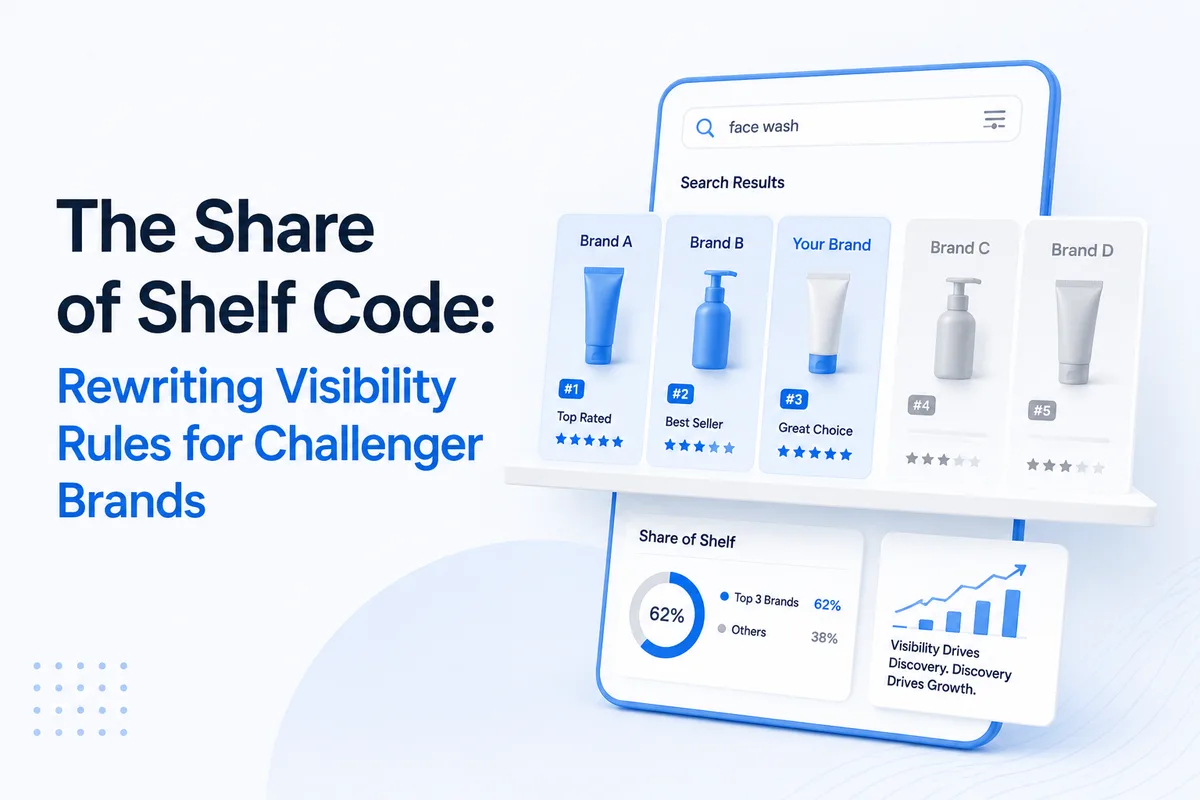
Visibility has fundamentally shifted in quick commerce from physical distribution to algorithmic discovery. Legacy brands currently enjoy advantages through larger assortments and deeper budgets, while challenger brands must employ precision tactics rather than scale-based competition.
The Challenge
Established players like Nescafé dominate search hierarchies through intent-driven SKU architecture, algorithmically-optimized metadata, and platform-level performance signals. Emerging brands face disadvantages: limited SKU lineups, smaller ad budgets, and weaker engagement metrics.
Strategic Framework for Challenger Brands
1. Micro-Intent Mapping
Rather than competing for broad searches like “chips,” brands should target specific queries: “protein chips,” “healthy evening snack,” “guilt-free snack.” Optimization involves benefit-focused product descriptions (“perfect for post-workout snacking”) and intent-rich metadata tags (“low calorie,” “keto snack,” “school snack”).
2. Geo-Fenced Growth Loops
Concentrate inventory and advertising budgets in hyperlocal markets where regional presence exists. Concentrated sales trigger algorithmic visibility boosts, creating self-reinforcing growth cycles.
3. Strategic SKU Architecture
Design each listing for specific consumer segments rather than mere flavor variations — a post-workout protein chip for fitness-conscious consumers, a late-night craving pack for comfort food occasions, a tiffin-safe mini pack for parental school-snack searches. This expands algorithmic surface area across multiple intent categories.
4. Time-Synced Promotion Bursts
Leverage off-peak hours (3–5 PM, post 10 PM) with limited-time discounts and low-competition ad bursts to train algorithms toward future prioritization.
Execution Example: Crav’d
A hypothetical snack brand launches three precision-engineered SKUs — Sriracha Baked Chips (spicy healthy searches), Low-Calorie 100-Cal Packs (diet-friendly snacks), After-School Snack Mix (healthy school snacks) — and geo-locks supply to NCR with targeted guilt-free-snacking campaigns, gaining organic ranking without competing on SKU volume.
Core Principle
The shelf is now volatile, algorithmic, and programmable. Success requires signal engineering, category adjacency, and growth-loop design — thinking like search strategists and D2C growth operators rather than following traditional retail playbooks.