
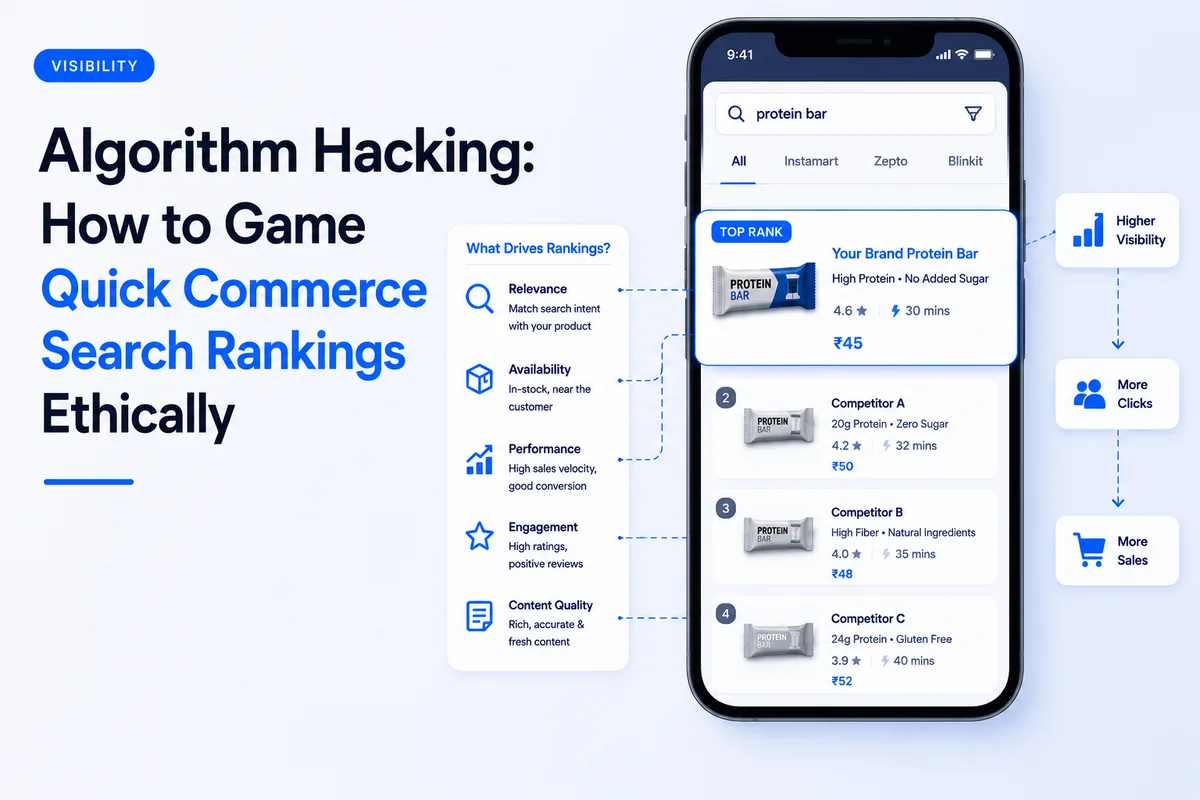
Quick commerce platforms operate as sophisticated algorithmic marketplaces where visibility highly determines velocity. Success requires understanding platform-specific ranking mechanisms rather than applying traditional SEO approaches.
The Algorithm Reality: Beyond Keywords
Quick commerce search algorithms prioritize different signals than Google or Amazon. They emphasize:
- Inventory Layer: Real-time stock levels and fulfillment probability
- Performance Layer: Historical conversion rates and customer satisfaction
- Relevance Layer: Keyword matching and category alignment
The inventory and performance layers carry substantially greater weight than traditional relevance signals in quick commerce environments.
The Ethical Framework: Working With, Not Against
Ethical optimization means aligning your strategy with platform objectives rather than exploiting loopholes. Sustainable tactics improve genuine customer experience and support platform goals like completion rates and retention.
The Five Pillars of Ethical Algorithm Optimization
1. Inventory Signal Optimization
Maintain consistent availability during peak demand windows (95%+ target). Algorithms reward reliability patterns with improved visibility rankings.
2. Conversion Rate Engineering
Focus on high-intent, specific search terms. A narrower audience with strong conversion signals outperforms broad, low-converting keywords algorithmically.
3. Velocity Momentum Building
Use sequential cluster launches rather than simultaneous rollouts. Build performance metrics in select regions before expanding, leveraging algorithmic credibility for broader deployment.
4. Customer Signal Optimization
Prioritize customer satisfaction and return rates. Encourage authentic reviews and consistent exceptional experiences to build algorithmic trust.
5. Competitive Displacement Tactics
Identify genuine market gaps rather than competing on identical terms. Algorithmic systems reward differentiation and unique value propositions.
Key Conclusion
Quick commerce algorithms aren’t obstacles to overcome, they’re systems to understand and work with. Brands that align optimization with platform interests build sustainable competitive advantages.