
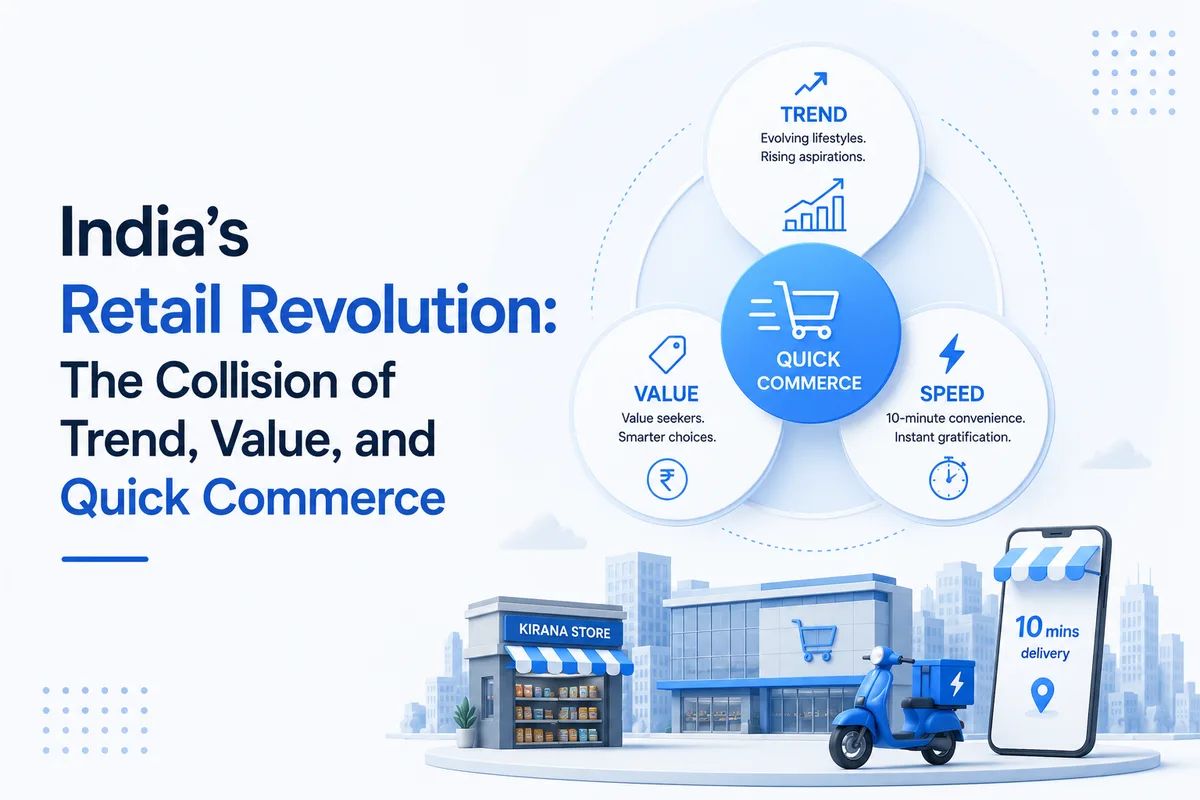
Quick Commerce (Q-com) in India is experiencing rapid transformation, but sustainability requires more than speed alone. The sector projects 40% year-over-year growth through 2030, yet faces a pivotal challenge: transcending its identity as merely a rapid delivery mechanism.
The Discovery Gap
Successful Q-com platforms must evolve into discovery engines rather than transactional utilities. Current user experiences remain functional — ordering essentials like toiletries or instant noodles — but lack emotional engagement. Trend-driven commerce success relies on psychological connection and anticipation, exemplified by seasonal events like Amazon Prime Day or Nykaa Pink Friday.
The constraint of Q-com’s interface means packaging, name, or value proposition needs to demand attention within milliseconds of visibility.
Perceived Value Strategy
Hyper-Value Commerce demonstrates that Indian consumers respond to psychological pricing mechanics — the “₹99 magic” effect — rather than absolute low prices. Current Q-com pricing structures create perception problems, particularly in tier-2+ cities, where delivery fees exceed product costs disproportionately.
Proposed Evolution
Platforms should introduce curated collections, celebrity partnerships, and trend-responsive offerings — Diwali specialty boxes, weekly self-care kits, cricket-season flash events — rather than relying exclusively on speed and convenience.
The Bigger Picture
The brands and platforms that win the next phase of Indian quick commerce won’t just be the fastest — they’ll be the ones that make discovery feel as good as delivery.