
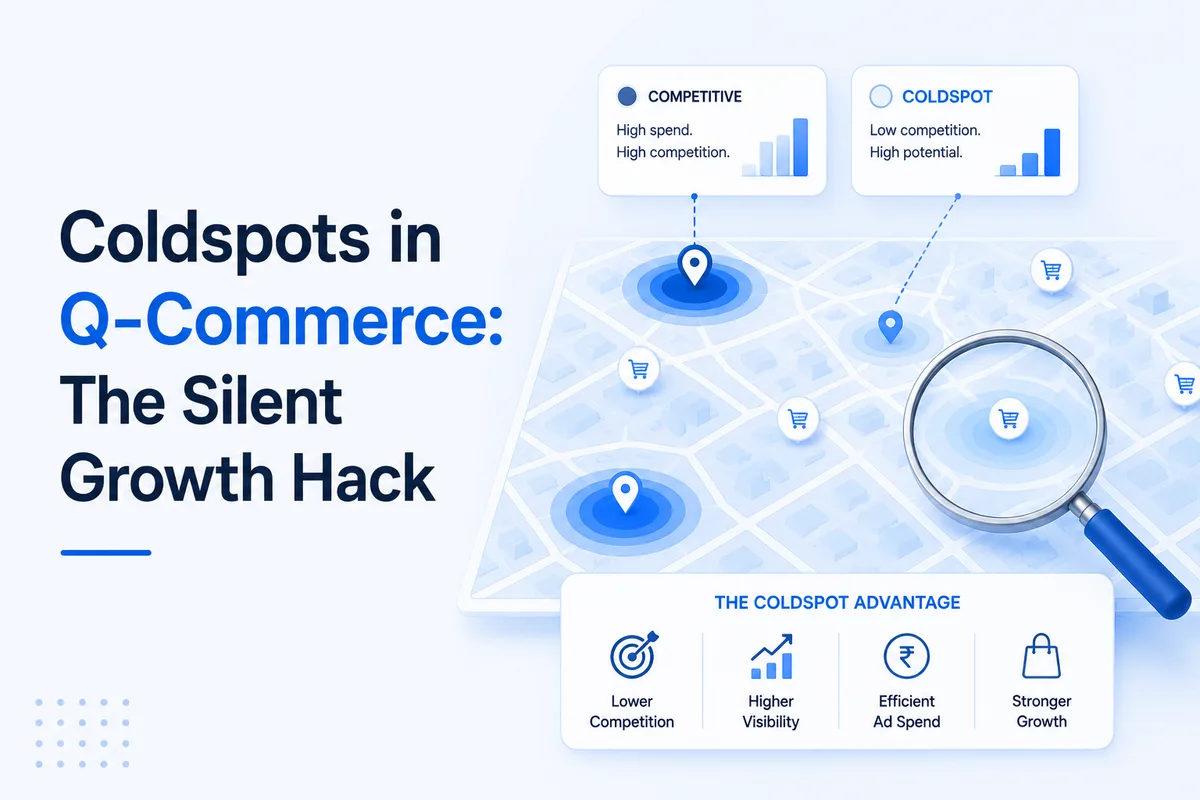
While established brands compete aggressively in saturated keyword spaces, numerous high-intent searches remain underserved due to poor visibility rather than lack of demand. These “coldspots” represent silent growth opportunities where precision targeting outperforms volume-based strategies.
The Problem: A Real-World Example
A fitness-focused professional searching for “low calorie snacks” on Blinkit encounters irrelevant legacy products instead of aligned options like Yoga Bar or Max Protein. This represents a discovery bottleneck rather than a demand deficit — the algorithm fails to register strong conversion signals, deepening the visibility gap.
Red Zones: The Competitive Trap
Three factors trap brands in expensive, low-return competitive spaces:
- SKU Proliferation Dilutes Discovery — Too many similar products (20+ peanut butter variants) overwhelm shoppers and confuse algorithmic ranking systems.
- Bidding Burnout Drains ROI — Keywords like “high protein” trigger escalating CPMs where brands pay more just to stay visible, not grow, trapping them in costly acquisition cycles.
- Sponsored Cannibalization — Brands appear in both sponsored and organic rankings simultaneously, bidding against themselves and paying for organic traffic.
Defining Coldspots
Coldspots share these characteristics:
- Fewer than 3 competing category players visible per scroll
- Minimal sponsored or curated content placement
- High-specificity user queries indicating strong intent
- Concentration in high-income urban areas (Bangalore, Mumbai, Gurgaon)
- Underutilization by brands focused on Amazon SEO
Coldspots aren’t empty. They’re quiet, and in digital retail, silence is a white space waiting to be activated.
The C.A.L.M. Framework
A structured approach identifies overlooked opportunities:
- C – Competitor Count: Audit category saturation; fewer than 2–3 high-relevance players signals opportunity
- A – Ads Running: Analyze ad density versus keyword specificity to identify poor semantic matching
- L – Local Fit: Leverage hyperlocal demand signals (fitness culture, income distribution) across tier-1 cities
- M – Marketplace Coverage: Audit SKU presence and optimize product descriptions for Q-commerce algorithms rather than assuming Amazon optimization transfers
Strategic Conclusion
Brands that shift focus from saturation to segmentation won’t just win clicks. They’ll win habits. Meaningful growth emerges from serving underserved demand rather than competing in congested spaces.