
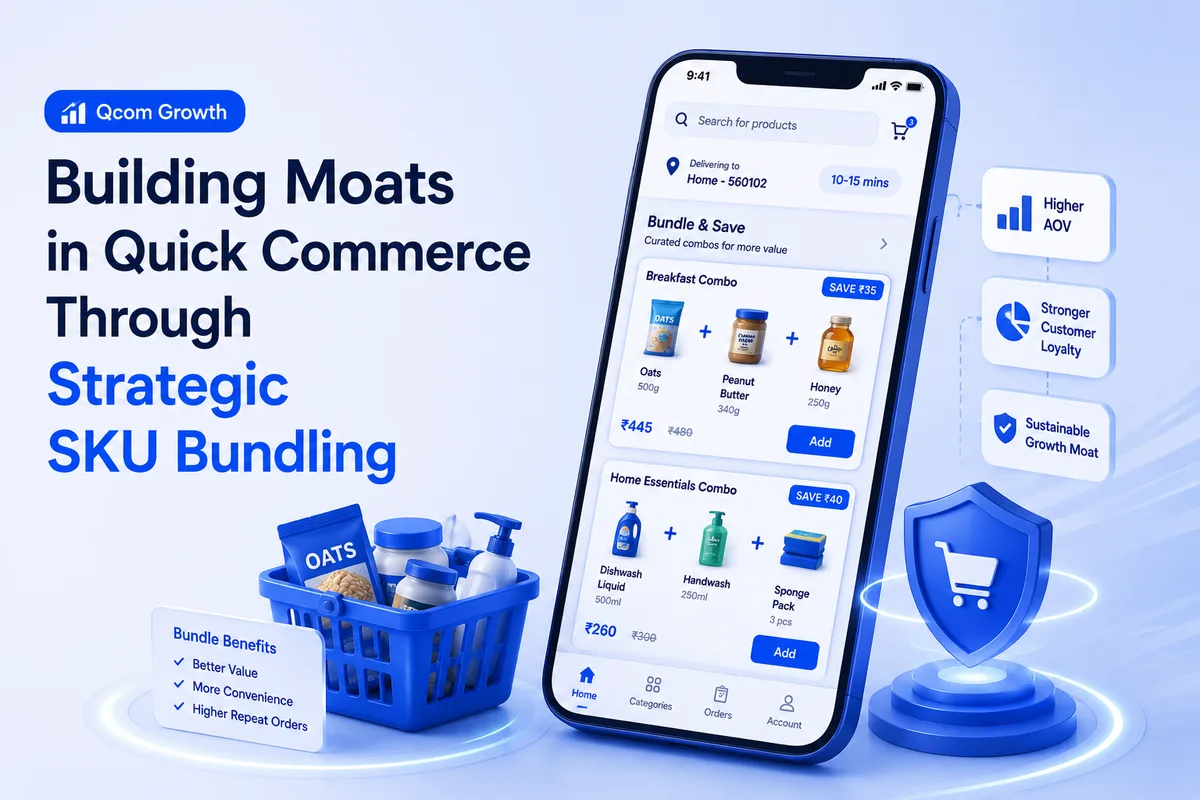
In the rapid-fire world of quick commerce, customers make split-second purchasing decisions. While bestselling individual products naturally gain traction through visibility and algorithmic preference, lesser-performing SKUs struggle to gain notice. Rather than relying on price reductions, which diminish margins, strategic bundling offers a sustainable alternative.
The approach pairs fast-moving anchor products with slower items to increase sales, boost cart values, and enhance overall platform metrics.
Why This Strategy Works
Three core benefits emerge:
- Leveraging bestseller visibility — Popular products naturally draw attention, making them ideal vehicles to introduce customers to underperforming items.
- Driving incremental revenue — Customers purchase low-performing SKUs more readily when bundled, increasing total sales without aggressive discounting.
- Optimizing platform mechanics — Most quick commerce platforms algorithmically favor higher average order values and bundle attachment rates, creating a feedback loop for better placement.
Strategic Bundle Design Principles
High-Velocity Anchors — Select your top-performing SKUs as bundle foundations.
Complementary Low-Velocity SKUs — Pair slower items with proven bestsellers — think popular coffee with a niche supplement, or trending face wash with a struggling moisturizer.
Platform-Optimized Structure — Create visually compelling combinations that platforms reward, avoiding unnecessary complexity.
Implementation Timeline
- Weeks 1–2: Identify candidates and analyze competitor approaches
- Weeks 3–4: Develop and test bundle variations
- Weeks 5–8: Launch, monitor performance metrics, and refine
Conclusion
Strategic bundling represents a practical mechanism to amplify slower-performing inventory without margin erosion, leveraging platform dynamics effectively.